
}Fast Approval
⛟Free Shipping
Exclusive Deals
ZOnline Prescription

Treatments starting @ $99
- Join Over 200k+ Members
- Cream, Nasal Sprays, Injections
- Low Doses starting @ $25
4.4 ★★★★⯨
14,095 reviews • Trustpilot

10% OFF your first Order
- Multi-Collagen Peptides
- Multiple Brand Options
- Stay Strong, Stay Inspired
4.7 ★★★★⯨
47 reviews • Trustpilot

Starting @ $129/month
- Get the Body, Energy & Confidence you Deserve
- Delivered to your Door
- YOUR Results – backed by Science
4.3 ★★★★⯨
500 reviews • Trustpilot

Starting @ $66/month
- Concierge Level Care
- Self-serve Telehealth experience
- Book a Consult Today
4.4 ★★★★⯨
865 reviews • Trustpilot

Peptides by BMI - COMING SOON
- Powerful Longevity Solutions
- Physician Guided options
- Age Well
4.6 ★★★★⯨
868 reviews • Trustpilot

Unlock Up to 50% OFF
- GHRH Peptide Therapy
- Home Delivery
- Optimize Your Natural Growth Hormone
4.3 ★★★★⯨
32 reviews • Trustpilot

Peptide Options Starting @ $99
- Peptide Therapy – No Guesswork
- Injectable & Oral Options
- FREE Shipping
4.3 ★★★★⯨
777 reviews • Trustpilot

Over 400,000 Patients served
- Optimize Longevity
- Up to 129 Bio-Markers analyzed
- No Insurance Required
4.1 ★★★★☆
18 reviews • Trustpilot

Starting @ $79/month
- FDA-approved Medications
- Shipped Direct to you
4.4 ★★★★⯨
648 reviews • Trustpilot

$100 OFF. Use code BEGIN100
- Boost Your Mood & Energy
- Feel Better. Look Younger
- Designed for REAL Results
4.3 ★★★★⯨
4,521 reviews • Trustpilot
What Are Peptides & How Do They Work?
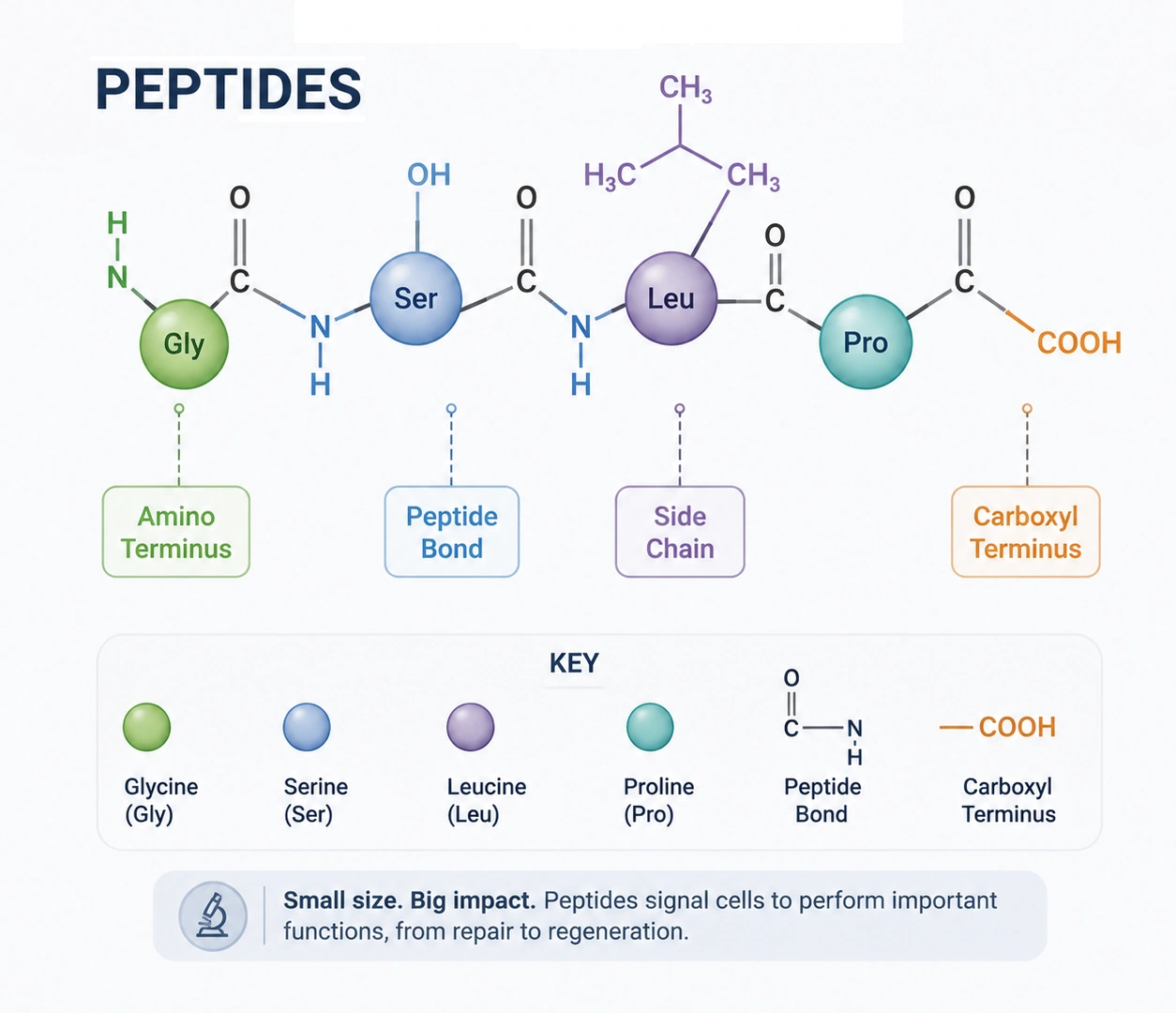
Peptides are short chains of amino acids – smaller and simpler than full proteins, but still capable of triggering specific, targeted responses in the body. Some peptides are well-established, FDA-approved medications you may already know by name (semaglutide, the active ingredient in Wegovy and Ozempic, is technically a peptide). Others are used in compounding pharmacies under prescription, aimed at things like tissue repair, recovery support, and general wellness. And a growing number are still working through the FDA’s evaluation process, meaning their legal availability can shift depending on where things stand with current regulatory review.
That last point matters more here than in most health categories. Because peptide regulation is genuinely in motion right now – with the FDA periodically reviewing which specific peptides compounding pharmacies are allowed to prepare – availability and legal status can change from what it was even a few months ago. A responsible provider stays current on this and will be transparent with you about exactly what’s legally available at the time you’re considering treatment, rather than assuming yesterday’s answer still applies today.
How Are Peptides Administered?
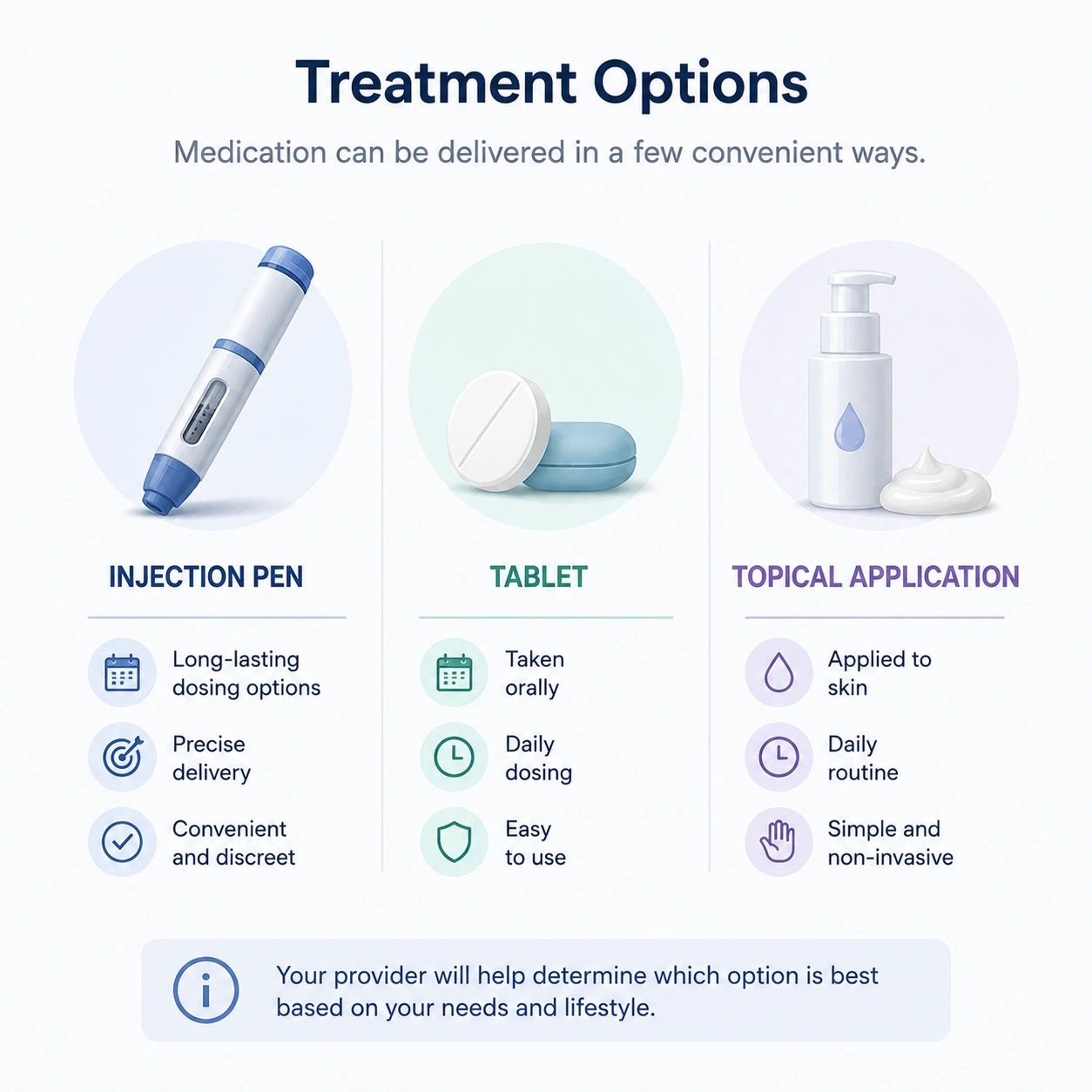
Depending on the specific peptide and what it’s being used for, administration typically falls into a few categories:
Subcutaneous Injections – the most common method, involving a small injection just under the skin, often self-administered at home after a provider walks you through the technique.
Oral/Sublingual Formulations – some peptides are available in tablet or under-the-tongue form, though injectable delivery generally remains more common for this category.
Topical Applications – a smaller number of peptide formulations are designed for topical use, depending on the specific goal.
Dosing protocols vary significantly depending on the specific peptide and what it’s being used to support – this is genuinely not a one-size-fits-all category, which is exactly why working with a provider who evaluates your specific goals matters more here than almost anywhere else in this space.
Peptide Regulation – Why It Matters?
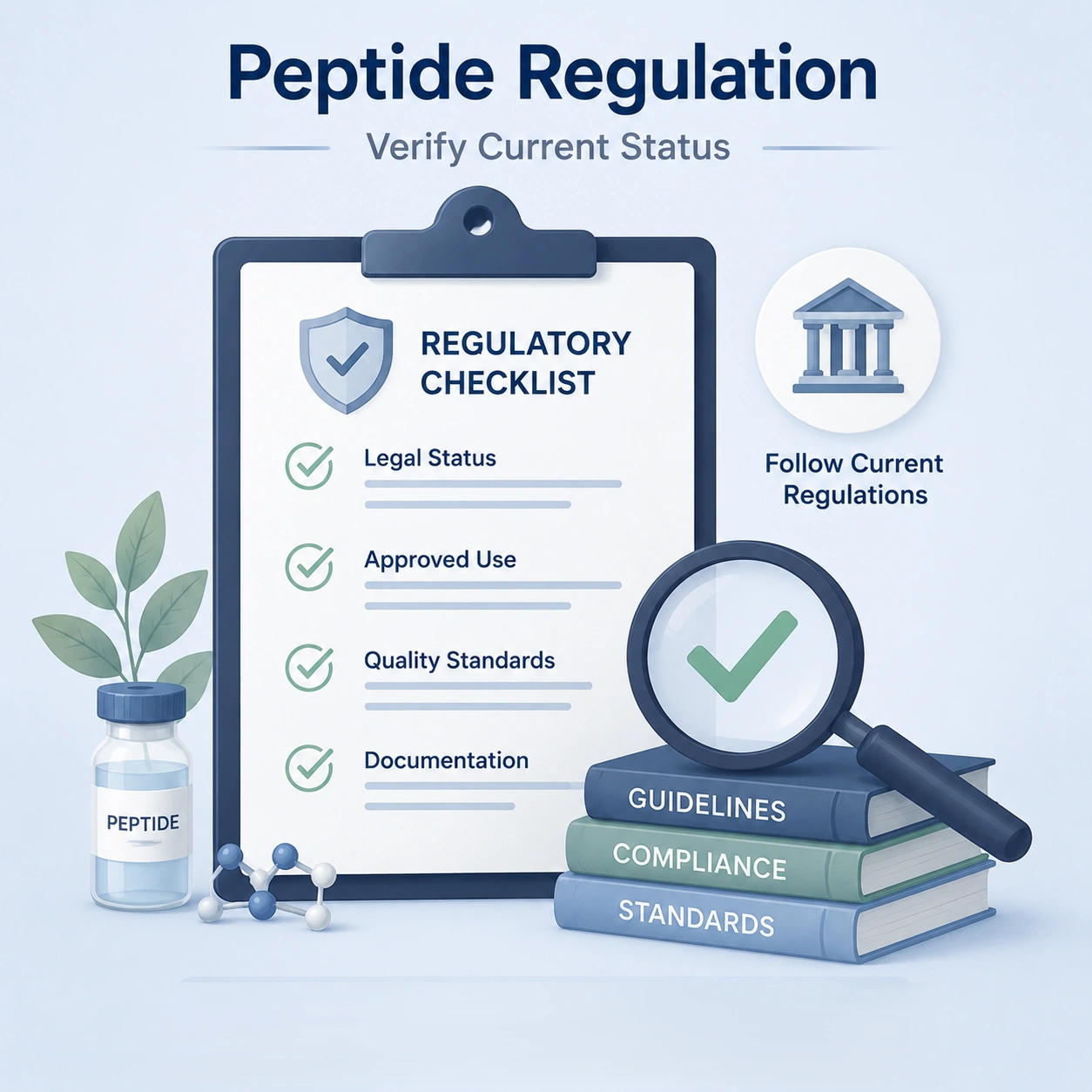
The FDA evaluates compounded substances (including many peptides) through a tiered category system. Substances with enough established safety data can be legally compounded by licensed pharmacies under a valid prescription. Others are still under review, meaning pharmacies can’t legally prepare them for patient use until that review concludes. This isn’t a reflection of whether a peptide is inherently dangerous – it often just reflects where the clinical evidence and regulatory process currently stand.
What this means for you as a patient:
- Legal availability of specific peptides can change, sometimes with little public notice
- A legitimate provider will only offer peptides currently permitted for compounding, and should be able to explain the regulatory basis if you ask
- “Research chemical” peptides sold without a prescription or medical oversight are a different, much higher-risk category – these aren’t intended for human use, aren’t quality-tested for that purpose, and a legitimate medical provider won’t offer them as a treatment
Because this regulatory picture shifts, it’s worth confirming directly with any provider what’s currently legally available at the time you’re considering treatment, rather than relying on older information – including, frankly, older marketing content from the provider itself.

Who Might Consider Peptide Therapy?
Because this category covers a wide range of specific compounds and goals, candidacy really depends on which peptide and purpose you’re discussing with a provider. Broadly, people explore peptide therapy for goals like:
- Recovery support after injury or intense physical training
- General wellness and healthy-aging support
- Metabolic or weight-management goals (for the FDA-approved peptide medications specifically, like semaglutide-class treatments)
- Sleep or stress-related wellness support
A prescription and medical evaluation are required regardless of the specific goal – a responsible provider will review your health history and explain which currently-legal options might be relevant to what you’re looking for, rather than offering a generic, one-size-fits-all protocol.
Potential Side Effects and Safety Considerations
Because “peptides” cover such a wide range of specific compounds, side effects vary considerably depending on which one is being used. That said, some general considerations apply across the category:
Commonly reported (varies by specific peptide):
- Injection site redness or irritation
- Headache or mild nausea, particularly when starting treatment
- Fatigue or mild flu-like symptoms in the first few doses for some peptides
Broader safety considerations:
- Because many peptides in this space have limited large-scale human clinical trial data compared to traditional FDA-approved medications, providers should be transparent about what is and isn’t well-established regarding long-term safety
- Sourcing matters significantly – pharmaceutical-grade, properly compounded peptides from a licensed pharmacy carry very different quality and safety assurances than unregulated “research chemical” products
This is general information, not medical advice. Given how much specific safety and regulatory information varies by individual peptide, a direct conversation with a licensed provider is especially important in this category.
Frequently Asked Questions
Are all peptides legal?
It depends on the specific peptide. Some are FDA-approved medications, others are legally compounded by licensed pharmacies under prescription, and some are currently restricted from compounding while under FDA review. Legal status can change, so it’s worth confirming current status directly with your provider rather than relying on general assumptions.
Is peptide therapy FDA-approved?
Some individual peptide medications are FDA-approved (semaglutide being a well-known example). Many others used in wellness and recovery contexts are compounded under prescription rather than individually FDA-approved as standalone drugs – which is a different, but still legal, regulatory pathway when done through a licensed pharmacy.
How much does peptide therapy cost?
Pricing varies significantly depending on the specific peptide, dose, and provider – it’s worth getting a clear, itemized cost breakdown before starting any protocol.
Can I use HSA/FSA for peptide therapy?
This depends heavily on the specific treatment and whether it’s tied to a diagnosed medical condition – check with your plan administrator, since coverage isn’t guaranteed the way it is for many standard prescription medications.
How do I know if a provider is legitimate?
Ask directly which specific peptides they offer and their current FDA compounding status. A legitimate provider will answer this clearly; hesitation or vague answers are a real warning sign.
peptideprovidersguide.com is a free online resource that offers reviews and comparisons of companies and the products and services they provide. All representations and warranties regarding the accuracy of the information are disclaimed. Company trademarks featured on our site are the property of their respective trademark holders and listings on our site do not imply endorsement. peptideprovidersguide.com does not claim to represent every available company, product, or service existing in the market as a whole.
peptideprovidersguide.com may receive compensation from the companies featured on this site. All forms of rankings, evaluations, reviews, and opinions featured on this site are determined internally and subjectively. The peptideprovidersguide.com team works hard to keep site information up to date, but all information is presented “as is” and should not be assumed accurate.
All users of this site are subject to the site’s “Terms of Use.”